RESPY Smart Mask
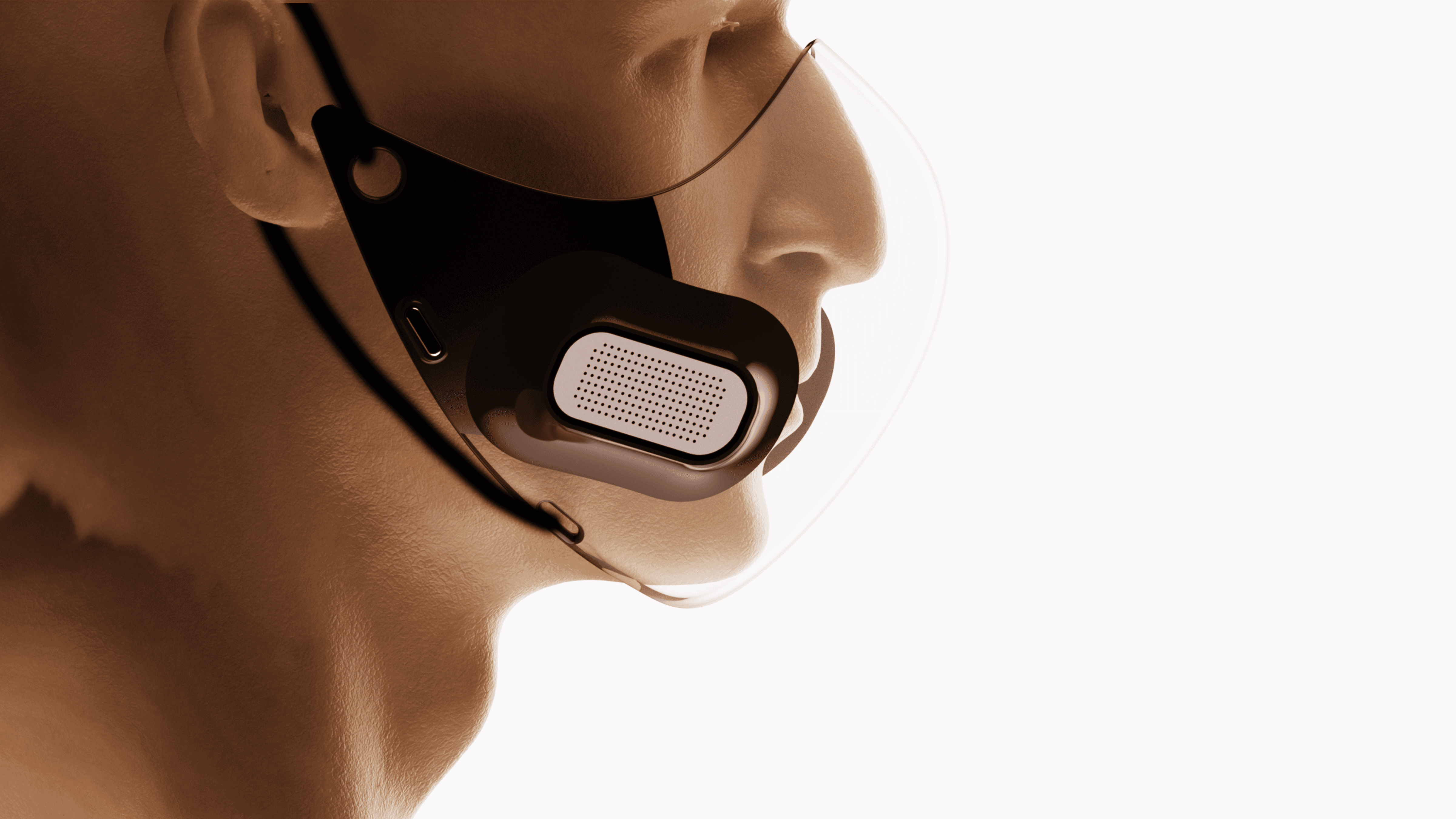
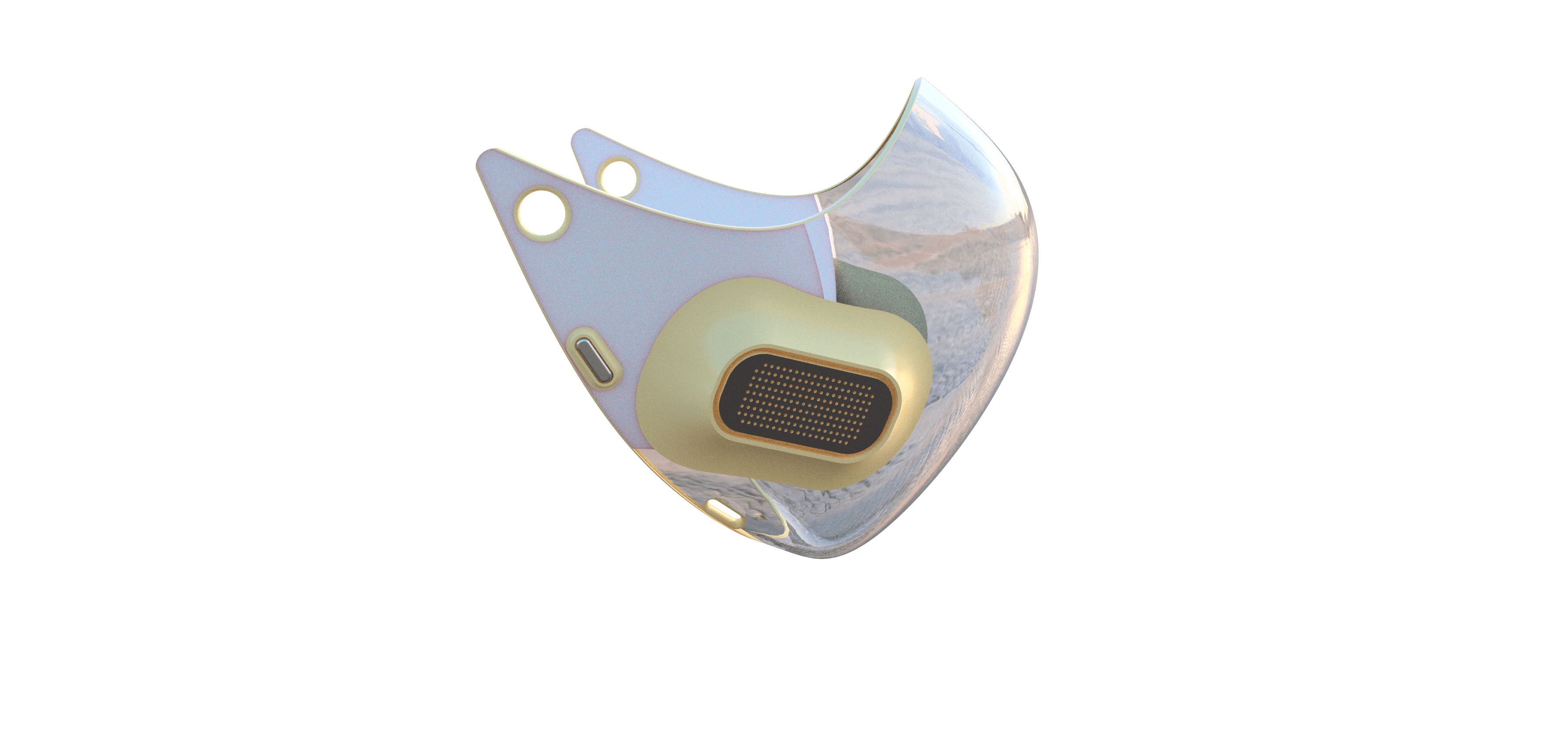
Modeled in Fusion rendered in Keyshot
Group Project
15 weeks
99% of the whole world breaths air that is deemed unsafe by the World Health Organization. Within the USA alone 156 million people live in areas that fail at least one metric of air pollution.
We developed a product through human centered design methods that targets this issue, helping people breath smarter and thrive.
Reflection
This was the most extensive research project I have done up until this point and I really enjoyed it. This project made me realize how much I love conducting research and learning about the gaps there are and where I can develop products to explore those gaps.
I loved working with my team of 2 other very talented designers over the course of the entire semester which I rarely get to do with how fast paced out projects usually are so being able to really dive into a speculative design project like this one and develop a product we are all proud of was extremely rewarding considering all the hard work we had to do when working in a team.
Thank you for your time!
What's wrong with current air purifiers?
Our Research
After reading over 17 academic sources on current air purification technology there were 4 categories of key findings:
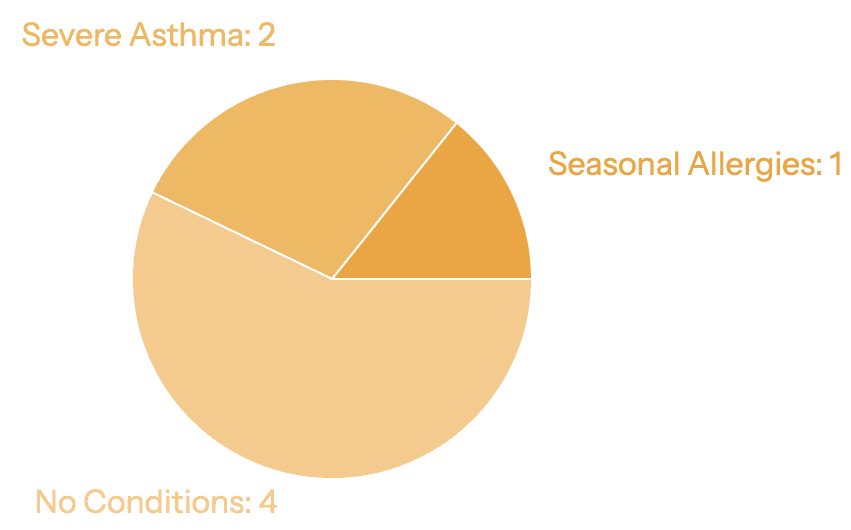
We talked to 6 students with varying backgrounds, majors, and living situations. As the chart shows they also had varying health conditions and relationships with the air.
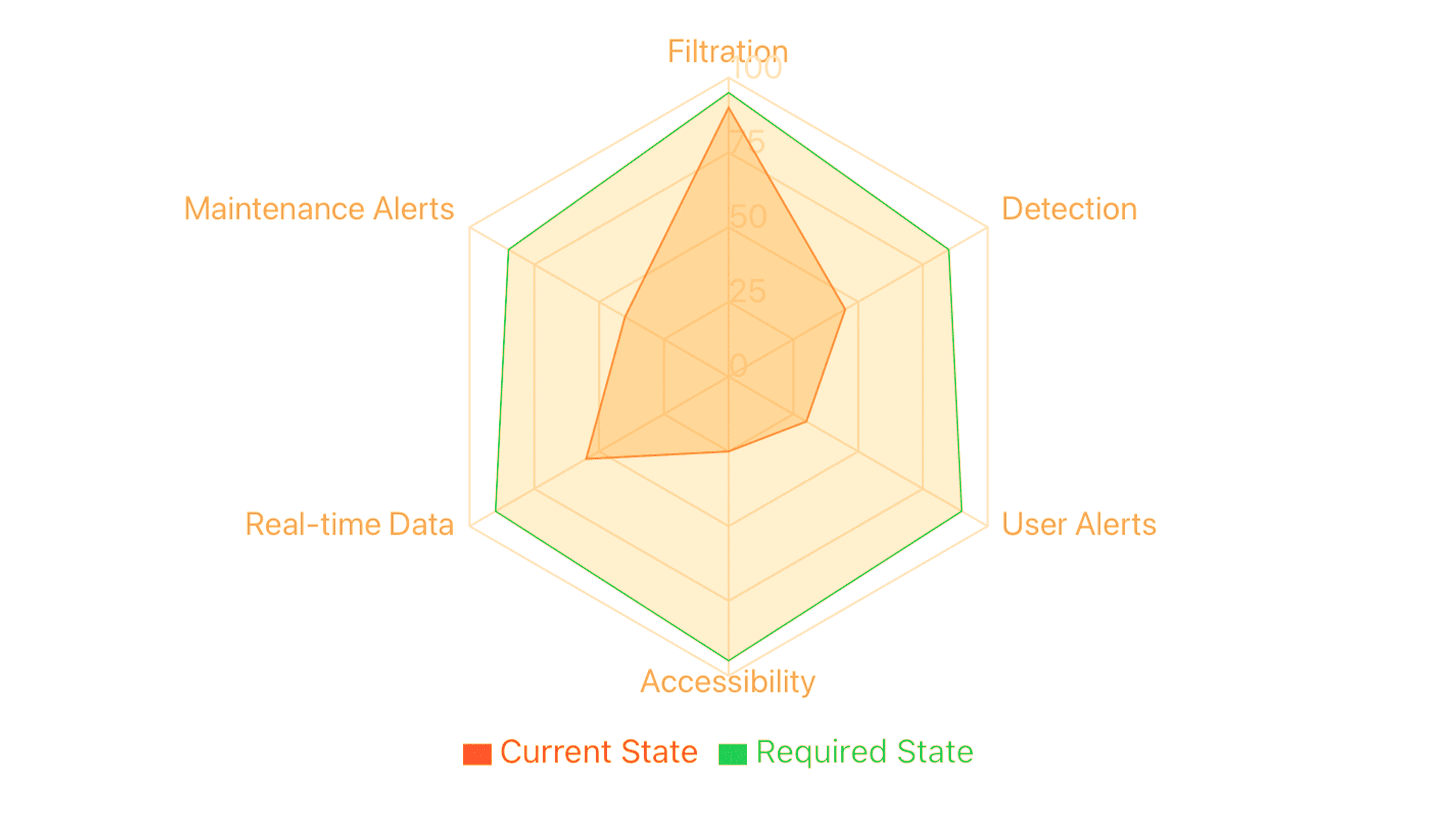
People deserve clear information, confidence in their device, and control over what they consume.
Existing air purifiers filter air, but they don’t give users the information they need.
They lack reliable detection, clear alerts, maintenance visibility, and real-time data.
Users are often left guessing about the quality of their air and the status of their device.
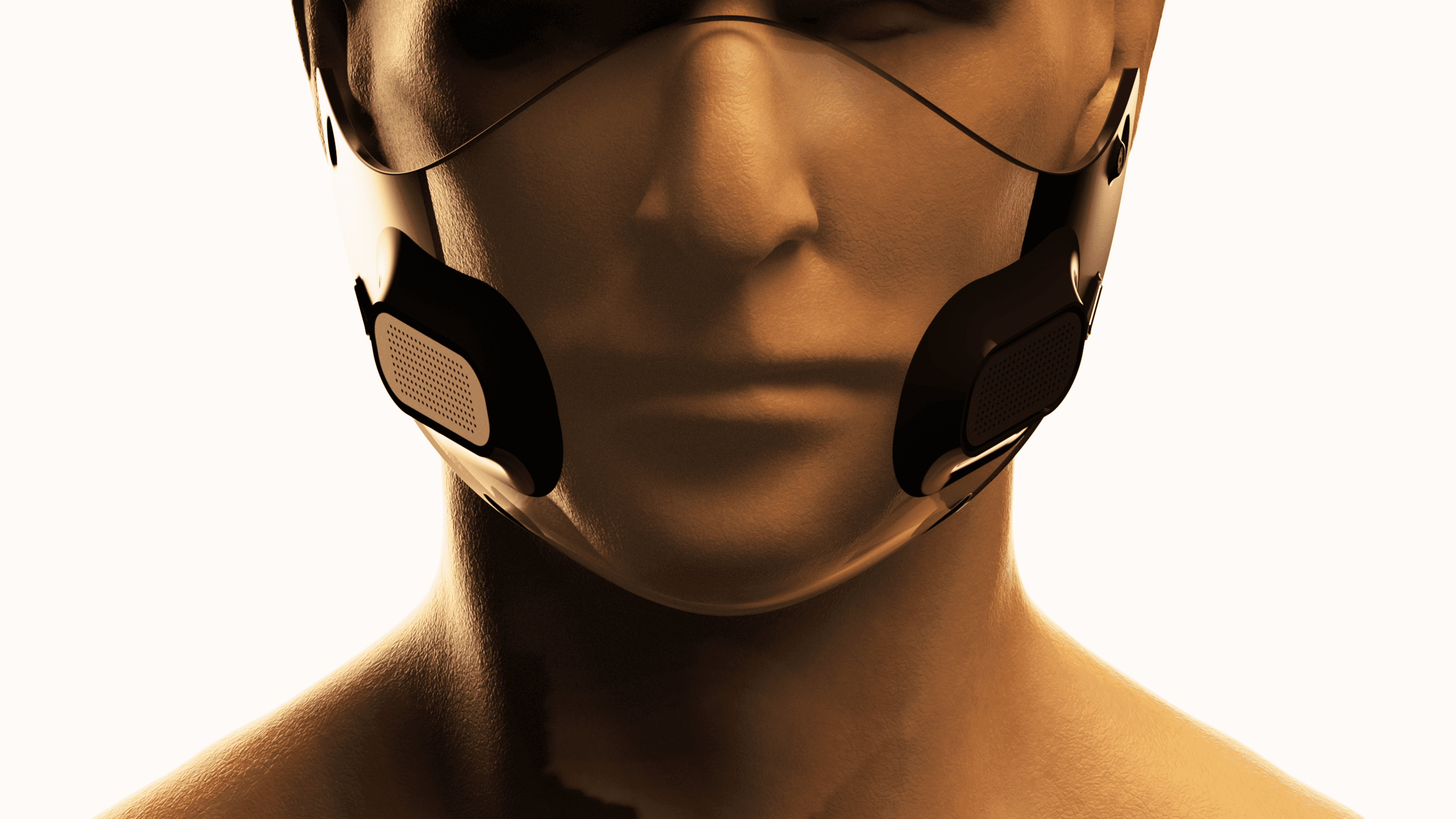
RESPY
your new breathing companion
We all need clean air to live, grow, and thrive
8 million people die prematurely every year as a result of air pollution – more than twice as many as from malaria, tuberculosis and HIV/AIDS combined.
Health and risk evidence
Technology gaps
contextual interviews
Communication gaps
venerable populations face the highest risks.
app only communication create accessibility barriers
HEPA filters are predisposed to microbial colonization
wearable devices excel in personalized feedback compared to static purifiers
our next step:
Understanding environments.
Understanding people.
Design implications
Ishan → has severe allergies; wants data, charts, and automation.
Max → seeks efficiency; frustrated by unclear product performance.
Luke → opens windows only when it smells; doesn’t think deeply about air.
Henry → feels anxious about unseen air; wants affordability and versatility.
Amelie → severe asthma; air quality directly impacts her daily function and mood.
Brent → lives in a windowless basement, has asthma, and needs reliable warnings.
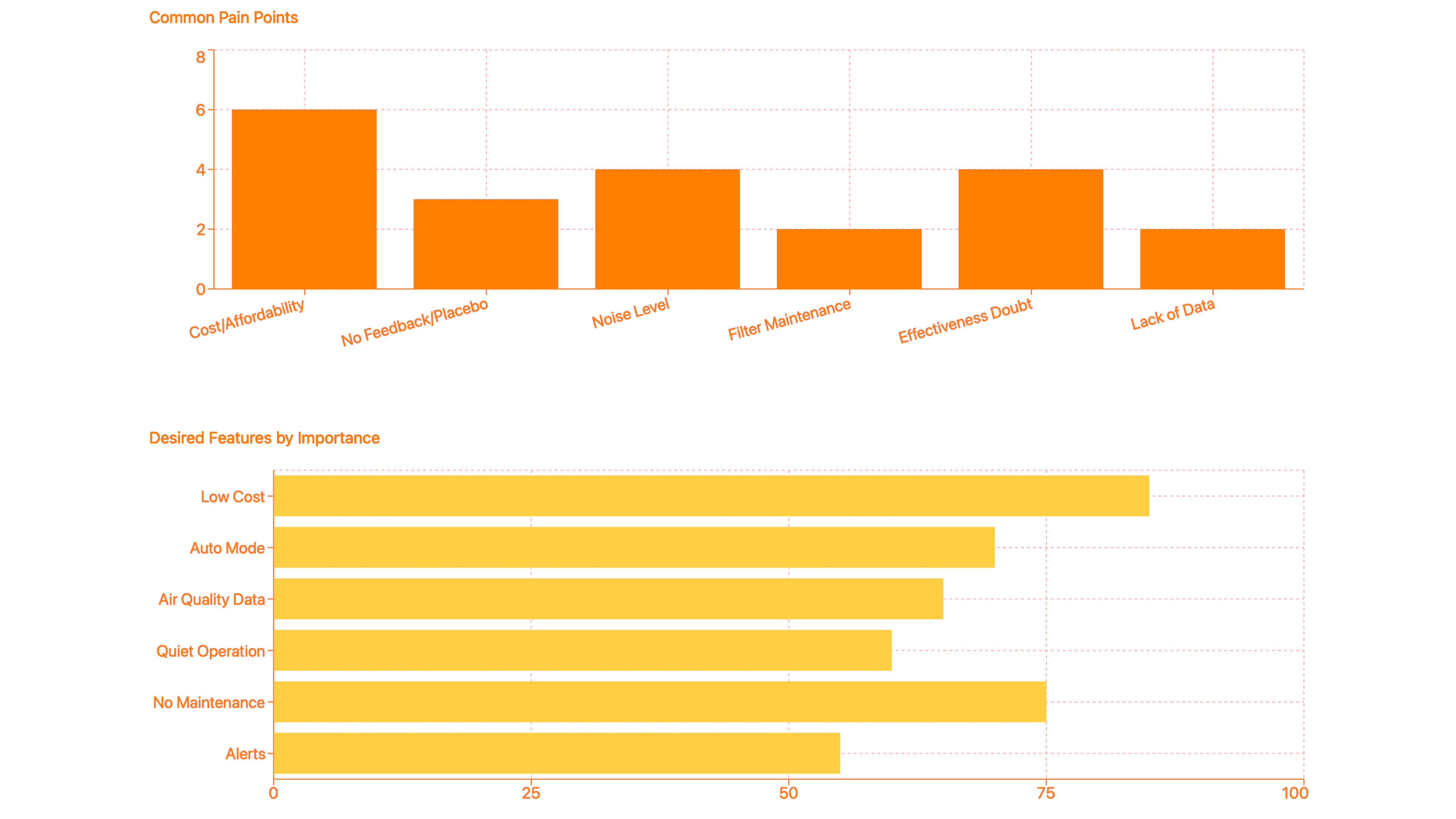
We learned that affordability was one of the main pain points when it came to purification devices. Maintenance and trust in the devices also came up a lot in our conversations.
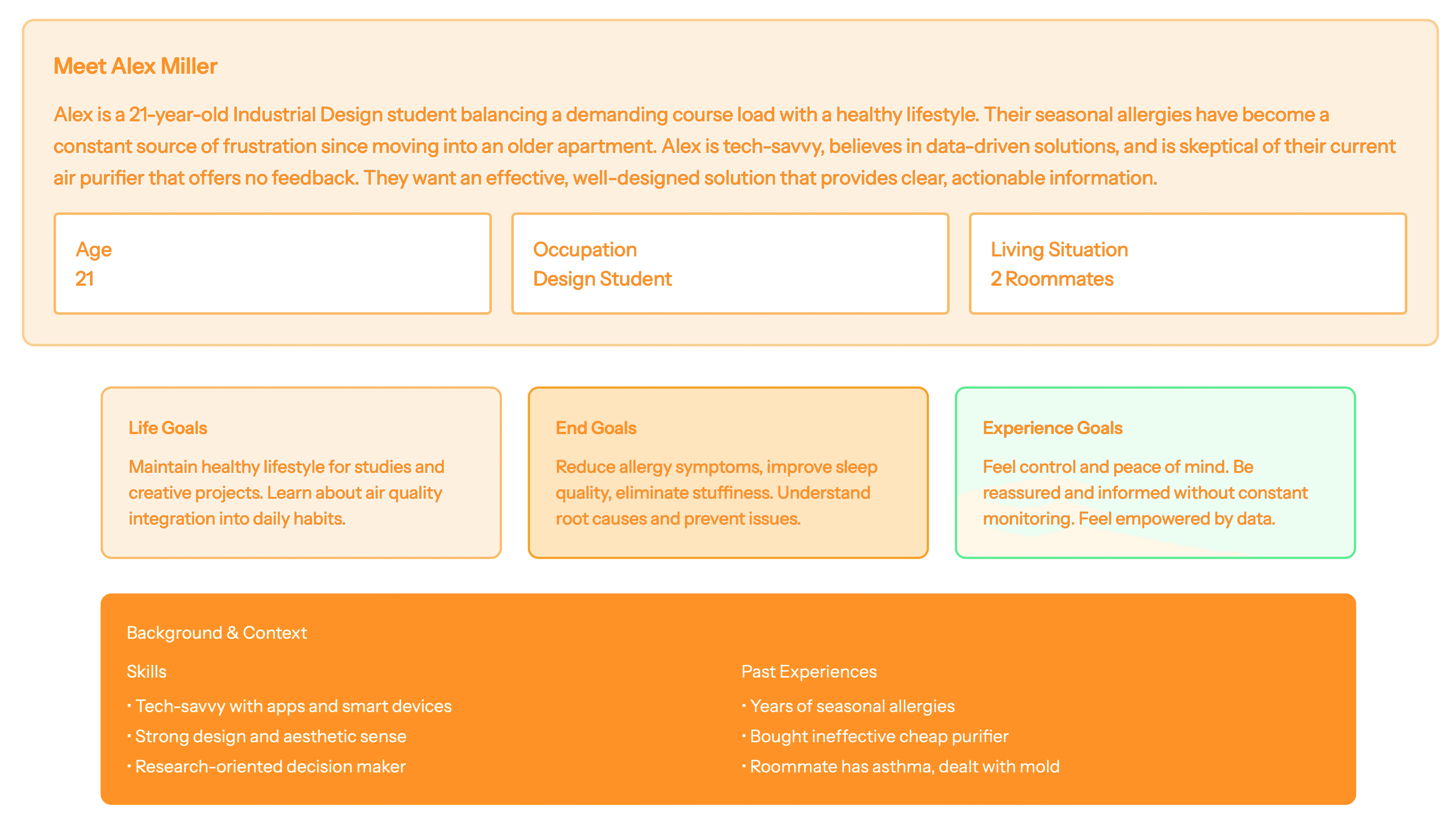
With this information we developed a very simple user persona to help us develop requirements for our product.
2. Implement Effective and Responsive "Auto Mode"
1. Provide Real-Time, Understandable Air Quality Feedback
3. Ensure Affordable and Accessible Maintenance
Design requirements
Functional
Functional
Contextual
The system must sense key indoor air pollutants and provide clear, real-time feedback on current air quality. Information accessible on device and mobile app.
Addresses user frustrations with "placebo" devices. Provides tangible data that builds trust and empowers users who value evidence-based solutions.
System automatically adjusts based on real-time sensor data. Increases performance when poor quality detected, documents fluctuations, identifies pathogens, and returns to quiet mode when air is clean.
Provides "set it and forget it" solution. Optimizes energy use, and appeals to users needing reassurance or threat monitoring.
Design uses affordable, easy-to-source filters that are simple to replace. Total cost of ownership must be accessible to people on budget.
Critical constraint across all interviews. High cost is biggest deterrent. Product cannot be luxury item, air is not a commodity.
These requirements are specific, achievable, and testable. This is important becuase it allows us to be realistic when it comes to developing out prototypes and final working model.
Our Concept
Ideation
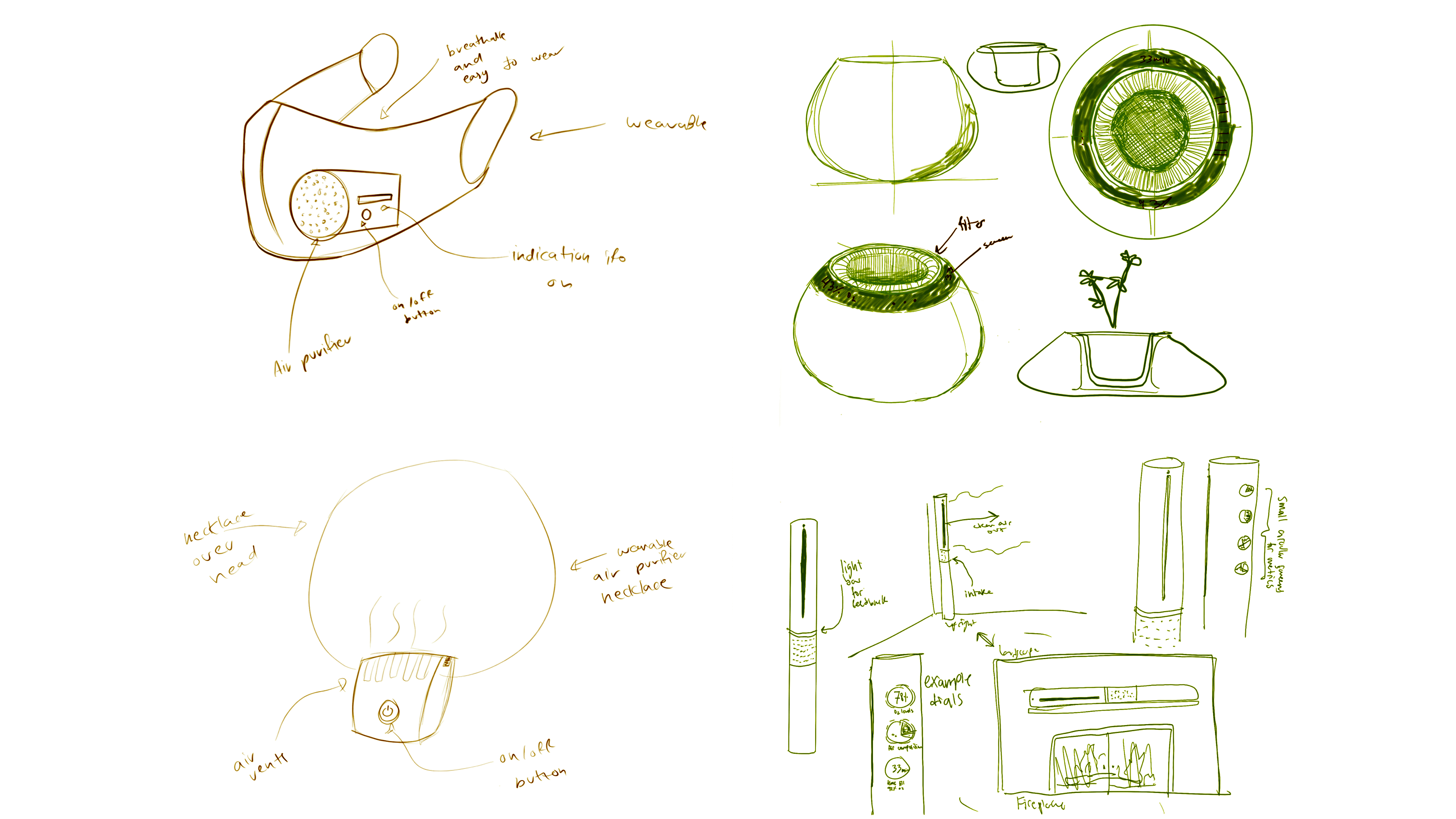
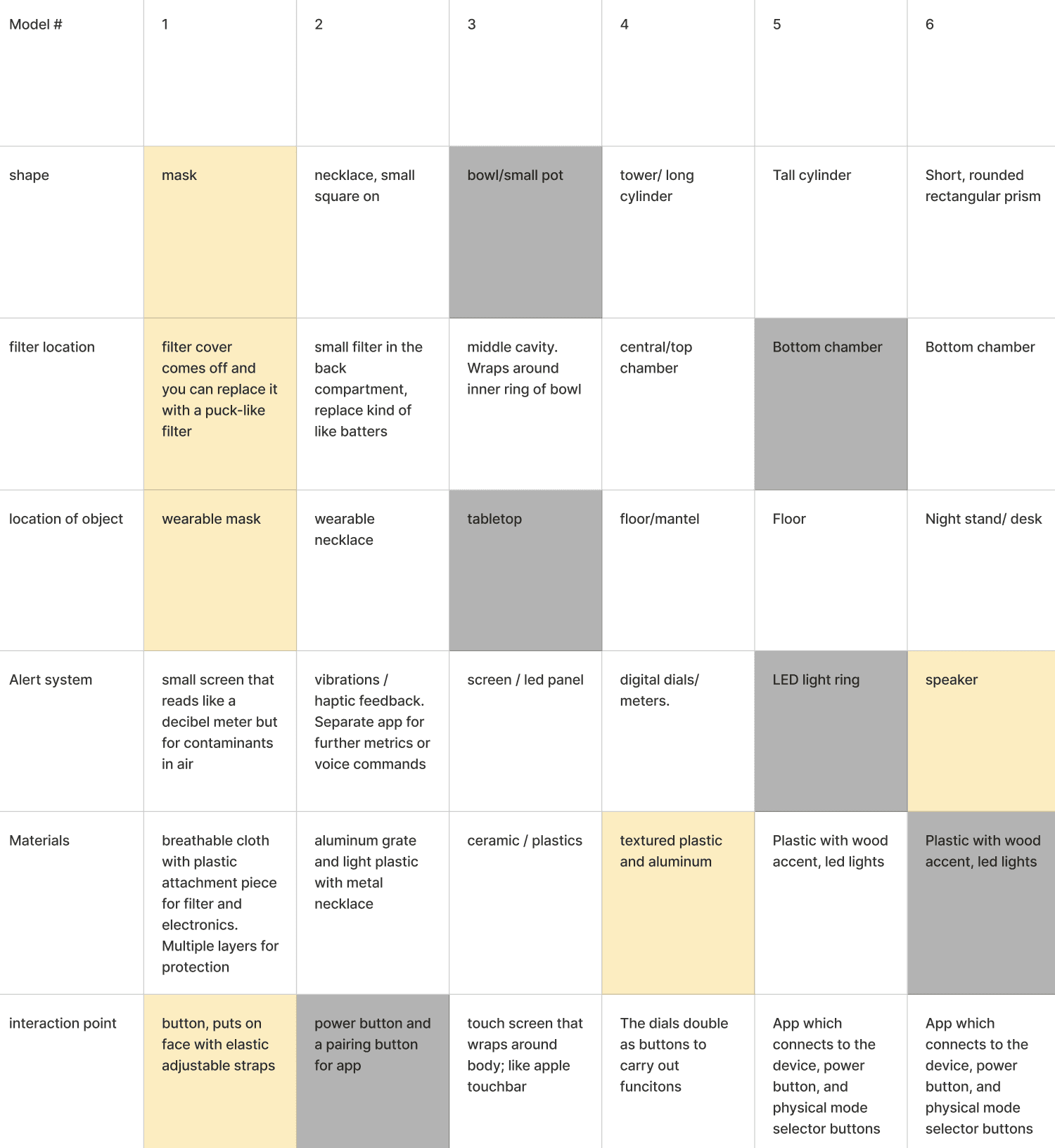
We explored a lot of different forms when it came to the development of our purification system. We looked at products that would blend into peoples lives either in a decorative way or through wearable technology.
After initial ideation we created a morphological chart that explored each of our 6 ideas and helped us determine what we were looking for when it came to developing our final design proposal.
After this phase we ended up with 2 final designs. We chose to develop the mask further.

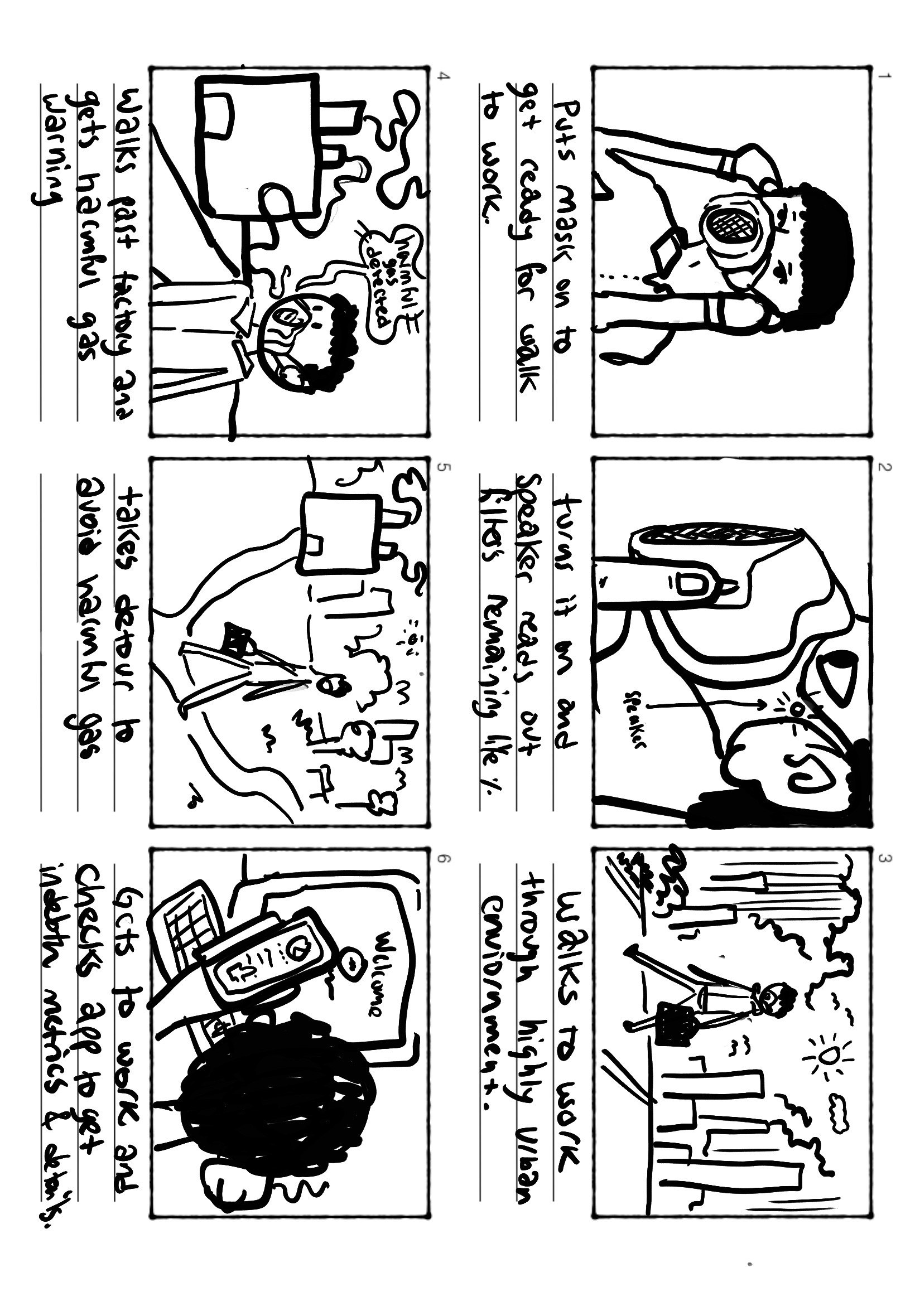
Scenerio
GIFs
These illustrations and videos help showcase the interactions with our product and helped us hone in on what we needed in our first prototype in order to begin testing
Prototyping
This cardboard prototype, powered by Arduino, shows how the mask would react when it comes in contact with harmful gasses. This is simulated with my partners hand approaching the ultrasonic sensor, activating the LED, which would ideally be a vibrating motor placed next to the users ear.
Testing
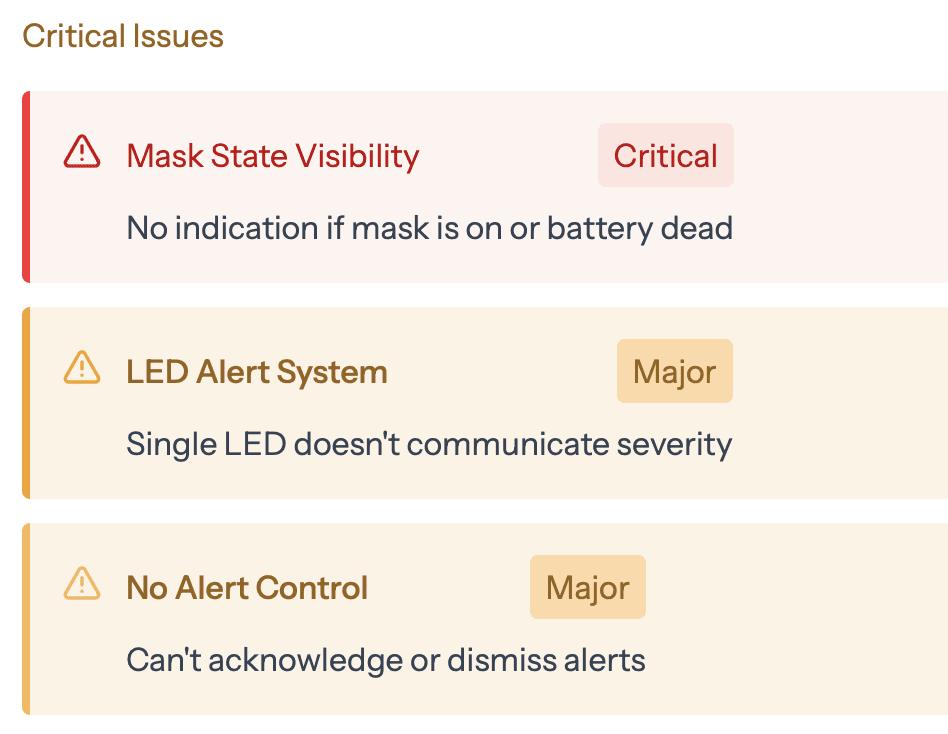
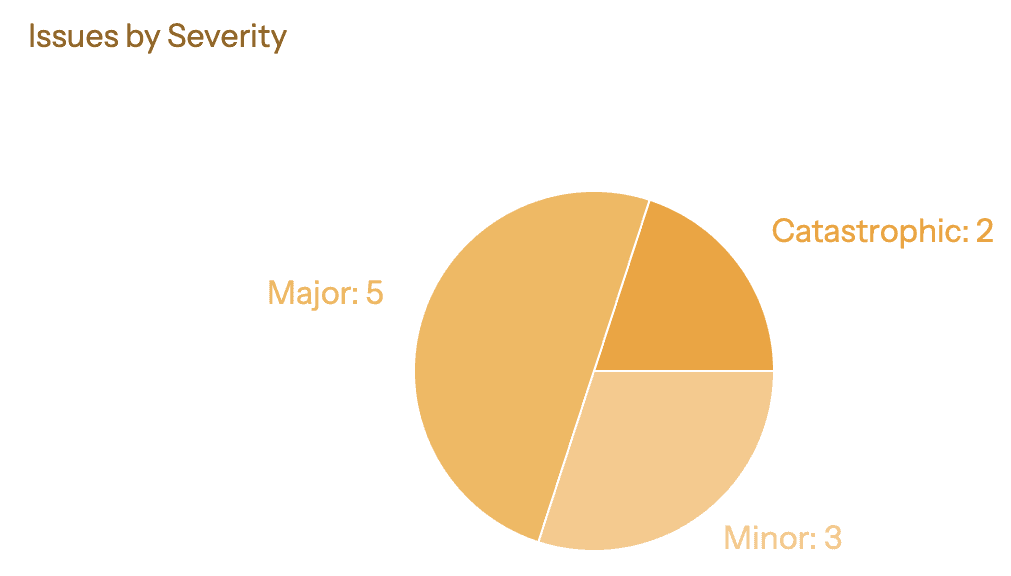
After developing this prototype, we ran heuristic evaluations with 3 separate individuals.
Users couldn’t tell if the device was on so we added a slowly pulsing haptic “heartbeat” when powered. Alerts needed clarity which led to us implementing different haptic patterns for moderate vs. critical threats. There were also concerns over no control over alerts, so we added a snooze button for non-critical warnings. Finally we had concerns about the fit of the mask and the seal so we redesigned it to be ergonomic and fit perfectly with the contours of the face.
Our final product
Demos
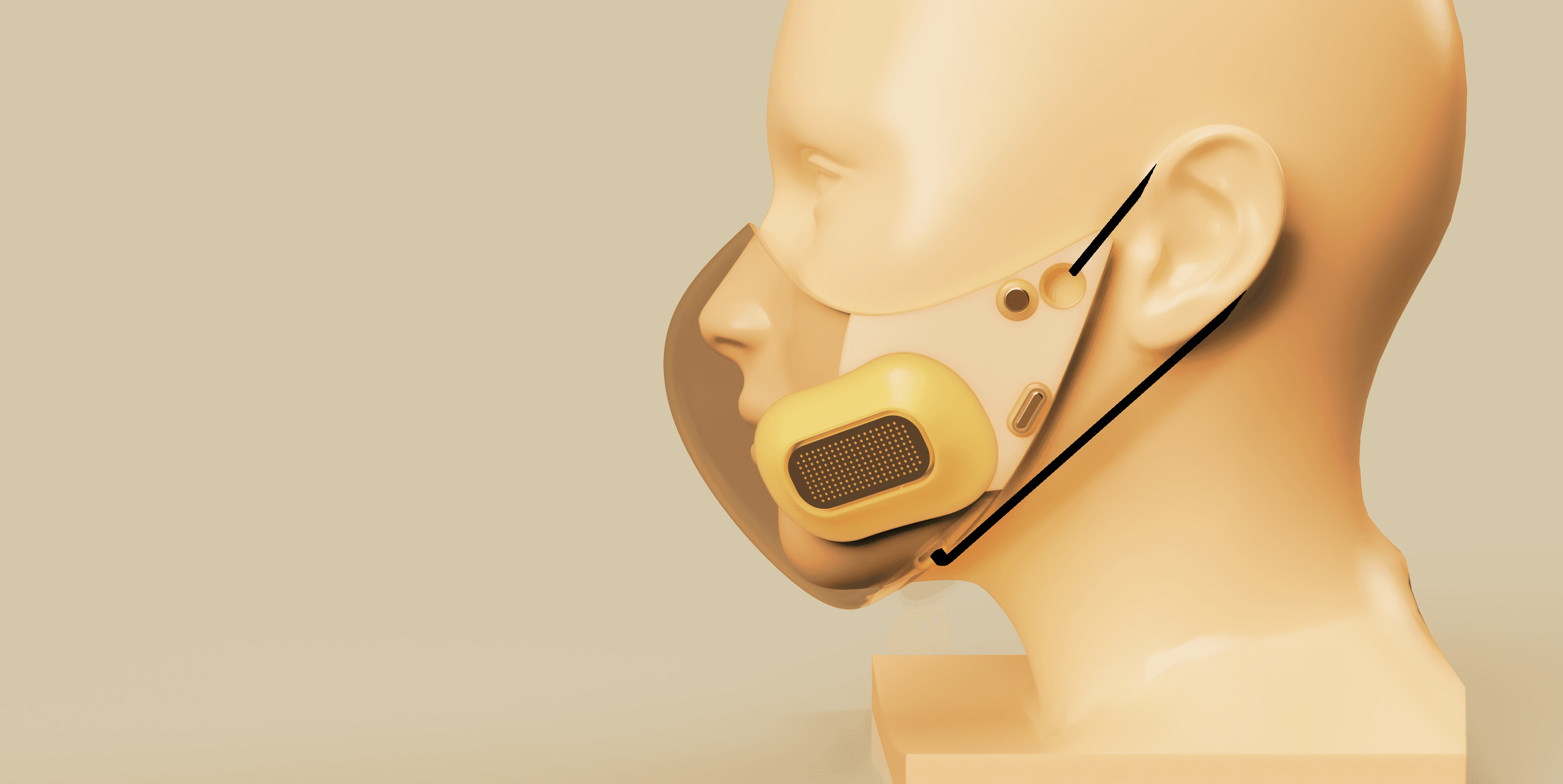
Haptic Communication
Low-level threats → slow, intermittent pulses
High-level threats → fast, urgent vibrations
Snoozable for non-critical situations
Companion App
Hourly charts
Daily summaries
Health insights
Inhalation breakdown
Device pairing
System status
Physical Experience
No sound
No screens
Just vibration + 2 buttons for power, pairing and snooze
Designed for all users
The device becomes a quiet, intelligent partner.
feeling the air for you, interpreting danger, and sharing the story through the app.
HCD Research Project - FS25